Kiedy?

Co?

Kto?

Pogoda

Mat Pom Sera Notte Temp
Oggi 16/25
Domani 14/23
Dom. 27 13/23
Lun. 28 12/22
Mar. 29 14/21

Temperatura dell'aria e del mare

Atrakcje

Theme parks in Lignano, learning with fun

(Photo for courtesy of Erika Zucchiatti)


For all children that spend the holiday in Lignano Sabbiadoro, there is not only the wonderful sea with the soft sand, where to build castles and tracks for marbles. The city built for them and their families also some theme and amusement parks, to spend entertaining days and evenings with the whole family.

Lignano counts 6 parks located along the entire city, which differs for the type of offered park (theme park, amusement park, zoo) and for the age at which they are dedicated.

Parks where children can have pure fun are the Luna Park Strabilia, the water park Aquasplash, the amusement parks Gommosi and Junior Park. Besides these amusement parks, there are also two parks that have developed an educational and nature-based tourism, as well as a family tourism. These are the Zoo Punta Verde and Gulliverlandia.

Let's start with the these two, that offer their guests green areas with the opportunity to learn about the environment, history and geography.

The Parco Zoo Punta Verde is located in Lignano Riviera, in the nature and it was born in 1980. the whole park covers an area of 18 hectares in a large bend of the river Tagliamento, which characterizes the vegetation and the beautiful landscapes.

The zoo is a unique space, where you can pass from one area to another in a natural way, with the gradual change of vegetation and habitat through paths and small bridges, that cross lakes and canals full of aquatic plants with wonderful colours. The zoo is now home for 1500 animals belonging to 200 different species and for all animals, the staff constantly recreate the right habitat in a wider area as possible.

Every summer there are also some activities for the public to teach the respect for the environment and also to learn about the different animals. Children can take part in a sort of summer camp, where through the play, learn many about nature and animals.

Days dedicated to the meetings with the lemurs, the ring-tailed monkeys, enjoyed a great success.

The second theme park is Gulliverlandia in Lignano Pineta, behind another famous park, Aquasplash. Gulliverlandia is recent: it was founded in 2000 with the aim to offer an educational theme park, offering games and rides in different areas divided into historical periods and geographical areas. In each area there is a structure that, through descriptives material, pictures and films, explains the period or the continent that you are visiting.

You pass from Volcano Rapids with dinosaurs, to the medieval area with knights' tournaments, from ruins Maya crossed by a train to the most important monuments in the world. The biggest attractions, however, is the Aquarium: passing in a glass tunnel under the sea level, you can admire rays, sharks and moray eels. And in the same area there are also the tropical fishes.

In these two parks in Lignano Pineta and Lignano Riviera not only children, but also adults can have fun and be surprised watching the beautiful animals or reading some particular information about dinosaurs or about the ways of life of Maya.

Endless fun in the amusing parks

Children in Lignano Sabbiadoro have the opportunity to have fun in every moment: with the good weather on the beach and, when it is cloudy or to end the day, have at disposal a great number of green parks with swings and slides and also equipped playgrounds and amusement parks.

In the whole city there are green areas where children can have fun with swings, slides and other attractions, while parents take a rest on the benches. In city centre in Sabbiadoro there the small parks in Parco San Giovanni Bosco, a meeting place for all the young guests of the city and also for the inhabitants. In the centre of the pedestrian zone, it is a very good point where to relax children and make new acquaintances.

In Lignano Pineta there are two beautiful parks immersed in the pine wood, suitable not only for children, but also to anyone want to take a walk in the quiet nature or do some sport thanks to the fitness paths. The best known is the Hemingway Park, named after the American writer, who visited Lignano and called it "the Florida of Italy", and it is located between Corso degli Alisei and Via Tarvisio. The second one is the Parco del Mare (Sea Park), where there is the playground I Gommosi, and overlooks the sea promenade. In addition to attractions for children, here there are also some paths with benches and drinking fountains and fitness trails with directions on how to practice the exercises. A nice way to spend a couple of hours in the middle of the coolness of the pines.

For the playgrounds, Lignano offers several parks, equipped with attractions, relaxation and refreshment points.

The Luna Park Strabilia, born in the fifties, is in Lignano Pineta along Viale Europa and counts about 60 rides. Easily reachable thanks its locations, it offers children and adults the opportunity to spend a funny evening among the several rides: slide, roller coasters, roller coasters for kids, house of ghosts, pirates' boat and Ferris wheel are only some of the attractions. In an amusement park can not fail the white, pink and blue icing sugar.

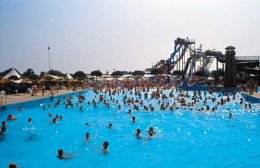
Aquasplash has been the first aquatic park in Italy. Built in 1985 in Lignano Pineta, near the entrance of the seaside resort, it offers many attractions on the water. Even here, children and adults find slides of every type, the artificial wave pool, the pyramid of rope, the water mushroom, but also beautiful green areas where lye in the sun or take a nice pick-nick. In addition to attractions, there is a fast-food restaurant, a café and a souvenirs shop. Aquasplash is a must for every tourist on holiday in Lignano Sabbiadoro!

The last park in Pineta is I Gommosi, inside the Parco del Mare: dedicated to young children, it is in a wonderful green area and offers inflatable slides and castles. While children jump on clowns, giraffes and dinosaurs, parents can enjoy a refreshing drink on the benches in the shade of the pines.

In Lignano Sabbiadoro there is the Junior Park, a park for children of different ages, that offers also parents the opportunity to spend a pleasant afternoon or evening in a parks a short walk from down-town and beach. In fact, its positions is enviable: at the beginning of the pedestrian area of Sabbiadoro and few steps from the beach. In addition to the attractions as train, canoe on the waters, small go kart, trampolines and motorboats, Junior Park offers also a snack bar and a fast-food restaurant where enjoy a good pizza.

Dock

Lignano can boast of an amount of "marinas" or little harbours still unrivalled not only along the Adriatic coast, but in the whole Mediterranean area, because of the huge variety of solutions, locations and buildings. The old Darsena Porto Vecchio, was built in the Thirties as an airport for army planes and it has been recently renewed by the A.A.S. thanks to regional funding. This is still the most lively and particular harbour area with its wharf for line boats, the little fleet of fishers' boats, the seat of harbour police, the Yacht Club Lignano and the public town fish market. On the western side of the harbour there is a little old harbour reserved to inhabitants and their little boats and there are the typical local fishermen houses, the so called "casoni", where you can taste traditional fish specialities, while on the eastern side of the peninsula, core centre of the town, there is the imposing and articulated residential estates ensemble called "Terra Mare", with its yacht harbour of Marina Punta Faro , it is a group of buildings providing many different services and equipped with facilities like the Sporting Club, where you can see columns resembling the ancient ones in the nearby lying Aquileia and mirrored in the wide swimming-pool. Three harbours, three different atmospheres.

But if you move backwards along Lignano you can now reach Lignano Riviera, where along the Tagliamento other two wonderful real-estate developments are located: Marina Uno , the first one to be created in Italy only for tourist purposes, it has been enriched with a welcoming hotel, restaurants and residences and it has always hosted inshore powerboats world championships.

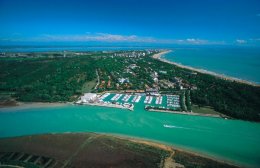
Sailing up the river, Marina Punta Verde , a little jewel providing many services and enshrined in the natural environment close to the Zoo park, this harbour is surrounded by a restaurant and some bungalows, resembling the traditional "casoni", and by a group of semidetached houses. Further Northwards lies Marina Azzurra, an harbour still under construction, with two little "MARINE"(docks) and residential developments."Nautels".

The list of little nice harbours offering more than 5000 moorings is not complete yet. Within the same district, under the town administration of Latisana, directly facing the lagoon of Marano there are the "MARINAS" of Marina Capo Nord and Porto Punta Gabbiani and the residential and nautical facilities ensemble of Aprilia marittima, which is a well-known destination among Austrian sailors too. In order to provide a more comprehensive idea the fishermen's harbour of Marano Lagunare has to be mentioned together with the little enchanting Marina Stella along the river bearing the same name.

To complete this overall description on the nautical sector in Lignano we have to mention all sport activities carried out by local clubs. The first club was the Y.C.L., founded in 1956 as "Circolo della Vela"(Sail Club), since then it has been presided by different chairpersons: Bertoli, Manfredi Englaro, Marchetti, De Minicis and Pujatti. The ECL is active in organizing sailing regattas and nautical events of international level, in promotional activities like editing an interesting calendar with plenty of interesting advices for sailors and information about sport activities, fishing competitions, even those organized by other younger clubs like C.V.A.M., C.N.M.U., C.V.M.P.F. and other events managed by neighbouring clubs S.N.S.G. and S.C.A. located in Grado che or by ohther clubs within the 11th area F.I.V.

In the night it is highly recommended to land at the Lighthouse P.ta Tagliamento; from there you have then to follow your route in direction N-E or N-NE towards the "boa foranea" (a buoy which is hardly noticeable for those ones landing within the fourth quadrant of the compass since it can be easily confused with the city-lights) and from here continue along a route 348� from the green light which has to be left on the right side while entering, but from which you cannot be more than 200mt far.

It is very important to avoid entrance in Lignano in case of warning strong south east wind (sirocco) or entrance in the Tagliamento river in case of strong south-east wind (sirocco) and east wind (bora).

Przejdź do artykułu

The Enviroment

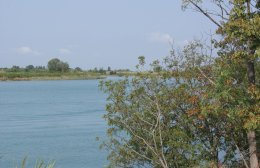
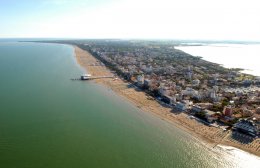
Lignano lies on a peninsula shaped by the mouth of the Tagliamento river and by the ancient net of the Adriatic streams, between the open sea and the Lagoon of Marano, along the northern shore of the Venice Gulf. 8 kilometers of thinnest sand right in between the sea and the thick pine-wood, which covers almost the whole peninsula. The luxuriant vegetation of Lignano is characterized by autochthonous plant species native to the region or here growing since ages: rows of holm-oaks all along the beach-walk, house black pines and seeds black pines, lime-trees, Siberian elms, birch trees, platans, horse-chestnut trees. Very interesting is the keeping of remarkably big oaks inside the town as witnesses of that part of the environment which has now disappeared. Landscapes all around the lagoon of Marano are made of land and water, a life element the presence of which as sea, river, or lagoon had a deep impact on the shaping of environment, lifestyle and business in Lignano.

The Marano Lagoon, which laps the west shores of the peninsula, is an area endowed with a extraordinary beautiful landscape and it constitutes an ecosystem of great environmental value because of its rich wildlife made up by very rare species, of its resistant marshy vegetation and of the peculiar fishermen abodes called "casoni", which were built with reed and which remind us of the old material culture of the lagoon, an evidence of a lifestyle and traditions the origins of which are lost in the past times. Within its jagged coast characterised by little islands and docks, this lagoon preserves vestiges of an ancient history, traces that are clearly noticeable in the valuable venetian-style town centre of Marano, a traditional fishermen's settlement dating back to the beginning of the 19th century and still enclosed within its old fortress walls. Many rivers flow into the lagoon of Marano, which is also crossed by a thick net of channels. All these rivers, which are rich of water and navigable from the lagoon up inside the plain, do actually spring on the surface in the area between the hilly part of the region the fertile lowlands, which are called "Bassa Friulana" and are characterised by geometrically designed farm estates, simple shapes and wide open spaces.

The River Stella offers a particularly evocative landscape and enchanting surroundings, where a regional natural park is about to be created. Its mouth lies under a particular environmental tutelage because it is a shelter and breeding-ground for local migrating as well as settled water wildlife species, besides there are also birdwatching equipped locations. This really unique environment is actually a further invitation to discover Lignano from a completely new point of view, to plunge deep inside the colours of Lignano's broad spaces, to be under the spell of its wonderful summer look or enchanted by the sad beauty of its winter, deeply enjoying all these sensations just like the young Carlino (the hero of "Confessions of an Italian", a book by the italian writer Ippolito Nievo) did when he discovered the misterious blue space called "sky", which was striped but transparent and which spread itself beyond "green blossoming plains crossed by very wide channels (...) that were flowing down to a much broader water plain on the background of which there were little mountains occasionally crowned by bell-towers"...

The beach

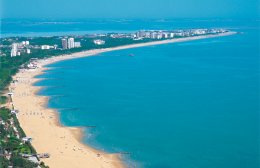
Typical Adriatic beach, with a fine, golden sand, the beach of Lignano extends for about 8 km. (from the mouth of the Tagliamento river to the harbour of "Terra-Mare" which opens onto the lagoon) and has a depth which varies from a minimum of about 80 meters to a maximum of 150 meters.
Entrance to the beach is free.
The 60 hectares of beach, supplied with beach cabanas, beach-beds, deck-chairs and sun umbrellas, offer a wide range of facilities at different prices for the beach equipment rental. In Lignano Sabbiadoro exist tracts of free beach where (and only in these areas) it is possible to set up private beach equipment (that must be removed in the evening).
Our guests have at their disposal cold and hot showers. (The latter can be used upon purchase of counters).
To reach the beach-line from the beach-office there are some ways which are made easier to meet the needs of disabled persons and of mothers with their push-chairs.
Gymnastic and entertainment activities are organised for grown-ups and children along the whole beach. The Beach Arena (beach of Sabbiadoro) a metallic construction with about 3.000 seats is the theatre for important, international, sports events and evening shows.

Przejdź do artykułu

Story

Records of Lignano previous to 15th April 1903 are only hardly enshrined in written documents, they are rather embodied in the shapes of this tough territory and its landscapes, which remained unchanged outside the main streams of history over the centuries. The only few signs referring to Lignano are to be found on ancient maps, where it is described merely as a physical existing piece of land, an "empty" area between the "political" area belonging to the Republic of Venice and the ancient fortress town of Marano, which represented the very last strategic defense line, the outer border of the areas under the hegemony of the "Serenissima" (i.e. the Republic of Venice). Between the Sixteenth and Seventeenth centuries the peninsula of Lignano appeared for the first time on the accurate plans carefully drawn by the so-called Water wise experts (Venetian magistracy appointed to guard the delicate breath of the lagoon environment, of vital interest for the "Serenissima"): 8 or 9 sets of dunes shaped by the winds, the tangled and moved net of canals, the sandy stripe of beach resulting from the ancient weaving of the sea, the winds and of the river Tagliamento. A thick wood of black-pines, holm-oaks, holly...a handful of houses on the edge of a slight lagoon slope, some single "Casone", a fishers shelter, and after 1500 a little church...

A kind of "no man's land" that should somehow give shelter to a handful of fishermen, raft-building craftsman, farmers "whose faces bore clear signs of malaria", swamp and lagoon free hunters, horse breeders; Those horses belonged to a wonderful horse breed and, according to the tradition, they used to live free and wild in the pinewood as very well described by the writer Elio Bartolini in a passage of a poetic writing of his: "Nearby the beach surrounding the main mouth of the Tagliamento River, the horses are watered until cooling before they run back to hide in the woods, the pleasure they get makes them shake their manes and scourge their own flanks with their tails". However, the history of Lignano is embodied also, and perhaps much more meaningfully, in its name - which bears the suffix "anum", thereby clearly proving the existence of a human settlement on the peninsula since the roman age.

A written document dating back to the V century reports of a "shore called Lignano", i.e. belonging to a man whose name was Lunius. An estate not directly linked to the land nor to farming activities, but rather -as argued by Luciano Bosio- aimed to providing the hinterland with everything that sea and lagoon could offer, i.e. fish preservation, production of garum (a peculiar fish sauce) and especially salt, which has always been an economic resource of the utmost importance. A little wharf, which was connected with the lagoon lying behind and with the hinterland plain through the many rivers flowing into the lagoon. This territory was so rough that even the local tradition still maintains "Lignano" to come from "Lupignanum": place infested with wolves, while the place name "Pineda" is thought to mean "wood forest". Those woods usually arrived from "Carnia" (the mountain area of the region), they were leaded along the Tagliamento river by the "zatars", the old raft-drivers that steered trunks along the Tagliamento river down to its mouth, where they were collected on venetian "trabaccoli" (a kind of ship) and hence brought to the Venice arsenal, where wood was always badly needed and it was brought there from all Venice possessions. In 1420 Lignano too became part of the possessions of the Republic of Venice, which gave it over to different noble families, as it was usual in the feudal system.

Among these noble families, the Vendramin Family, which was at that time dominating over Latisana and descended from the "dogi" (the highest political authority within the Republic of Venice), was the only one to bind tightly its name to Lignano by having the little nice "Church of Saint Zachary" built right in the core of the tiny farmers'village of Lignano Pineta, probably around the second half of the 16th century. This little church, which actually marked the Vendramin's possession on Lignano, had not been built for the almost meaningless settled community (3"foci" - fireplaces, i.e. houses in 1466; 2 houses, 8 people "aged enough to receive the Holy Communion" and some children in 1648), but rather for the far more important group of fishermen and boatmen who often stopped in this area.

Actually, the harbour of Lignano was strategically important as a key access in order to reach by ship the sea area facing Marano which meanwhile had been transformed into a fortress that was to become the keystone of Venetian supremacy on the Adriatic sea. Therefore, only in connection with the far more important town of Marano, Lignano happened to be mentioned in documents concerning medieval and modern history. After a long series of skirmishes between Venice and the Habsburg Empire (in consequence of which a little fortress had been built ad the edge of the peninsula in order to protect the "harbour"), Lignano was not acknowledged within the Vendramin Family'possessions any more, in fact it became "Terra del Dogado", i.e. part of the military possessions of the Republic of Venice, directly managed by the so called "Council of Ten". Meanwhile, time passed in Lignano without leaving any significant sign, everything but the seasons, that changed one after the other, remained the same. During the Age of Napoleon a further little bunker was built to support the implementation of the Continental Blockade against England in 1812. At the same time, all around the little fortress of the "harbour Lignano" some people were settling down: in 1813 there were 70 inhabitants, among which police officers stationing in Lignano and a sanitary supervisor. All this remained unchanged, like floating in time, until the beginning of 20th century, when Lignano definitely committed itself to tourist industry.

Tratto da "MINIGUIDA PER ERUDITI E GAUDENTI" by kind concession of Luigi De Minicis